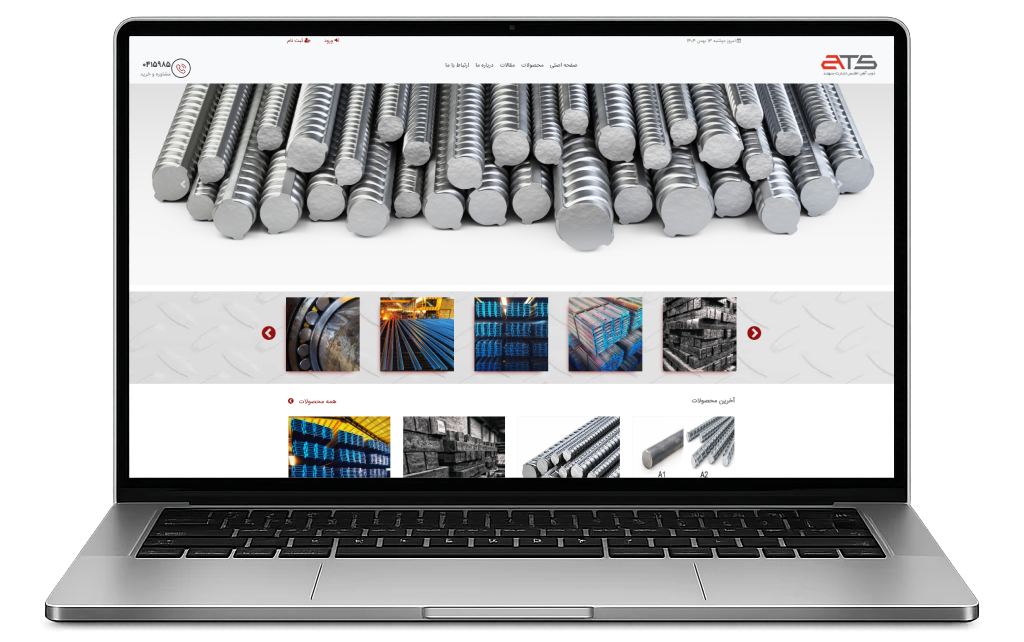
Overview:
Atlas Tejarat Sahand Group, operating under the industrial name Atlas Tejarat , was established with the strategic vision of creating a fully integrated steelmaking complex. The group aims to cover the entire steel value chain—from iron ore extraction to the production of various rolled alloy steel products—while adhering to international quality and manufacturing standards. By leveraging industrial expertise, long-term planning, and modern technologies, Atlas Tejarat seeks to play a key role in the sustainable development of the steel industry.
With a forward-looking approach and continuous investment in upgrading facilities and infrastructure, Atlas Tejarat Sahand Group aspires to strengthen its position as a reputable and leading industrial enterprise. The group is committed to aligning its growth with national development goals, enhancing domestic production capabilities, and contributing to the long-term prosperity of the region by expanding advanced steel manufacturing capacities and maintaining excellence across all stages of its operations.
Project Challenges
Every software project, beyond coding itself, involves a set of technical and business challenges whose proper management has a direct impact on the final success of the product.
Detailed Requirements Analysis
Translating the initial business needs into clear and implementable technical documentation required continuous interaction with stakeholders, receiving periodic feedback, and aligning business goals with technical solutions.
Choosing the Optimal Architecture
Designing a scalable, secure, and high‑performance architecture that allows for easy future development and maintenance was one of the key and most influential decisions in the project.
Integration with Existing Systems
Connecting and synchronizing the project with existing services, APIs, and infrastructures—without causing disruption in the active systems—required precise design and multi‑stage testing.
Performance and User Experience Optimization
Achieving balance between speed, system stability, and a smooth user experience— especially under heavy loads and simultaneous users—was one of the major challenges of this project.
Change Management and Scalability
Changing requirements and priorities during the development cycle is inevitable. Designing a flexible structure capable of managing these changes—without quality decline, cost increase, or technical risk—was one of the essential requirements of the project.